
Javalina
BUILT FOR FLEXIBILITY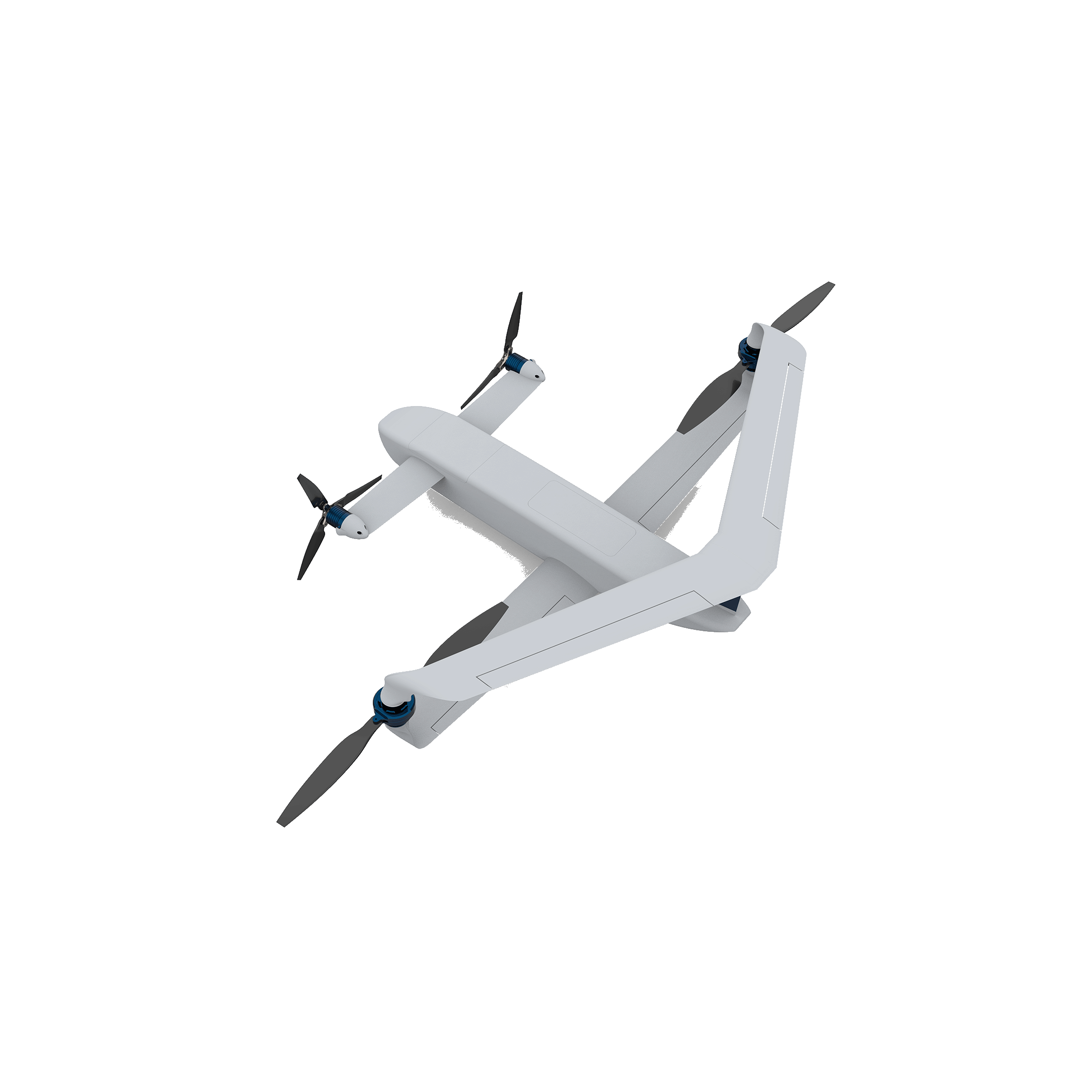
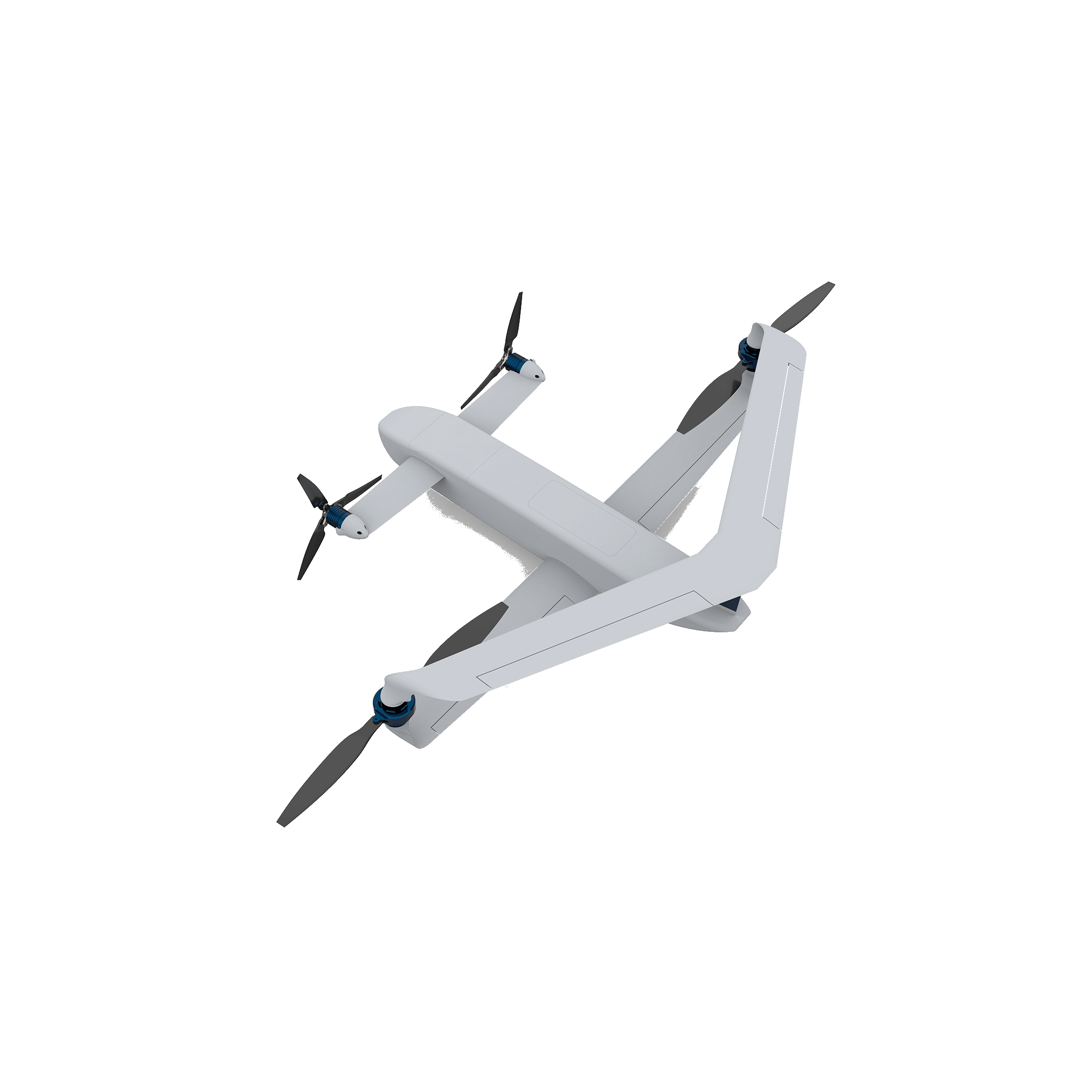
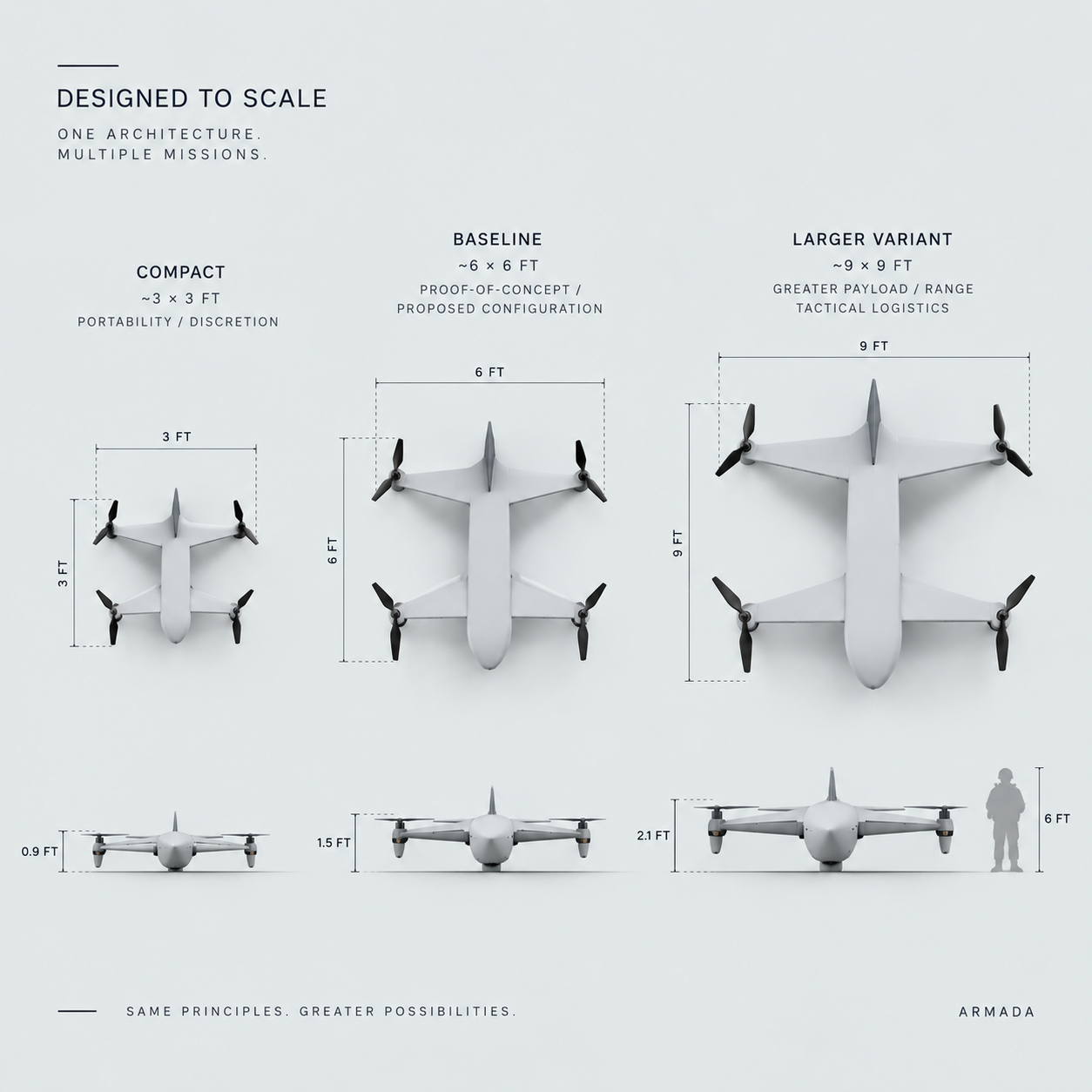
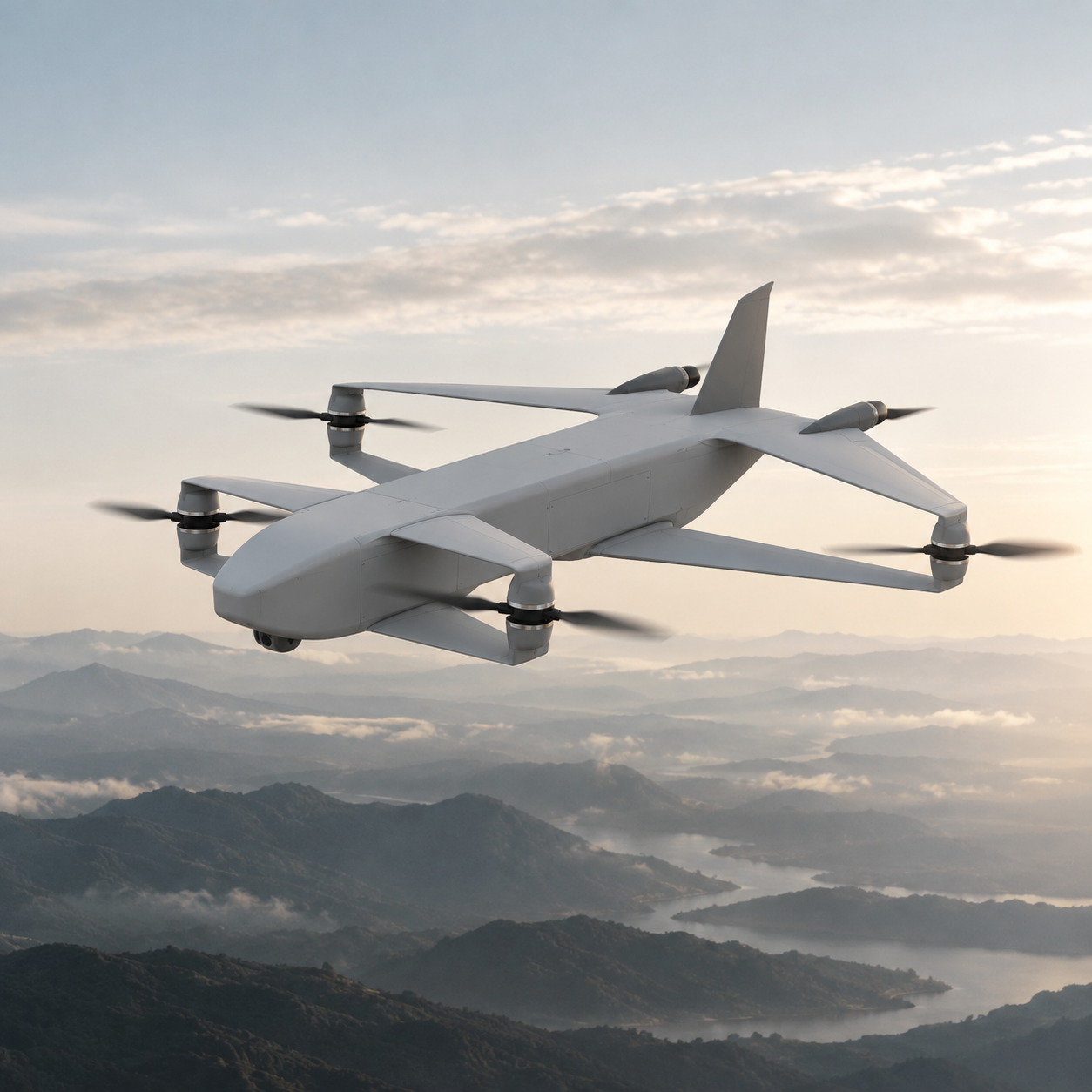
Javalina is a multi-mode VTOL platform designed to combine efficient vertical flight with the speed, range and endurance of a fixed-wing aircraft. Its joined-wing architecture integrates large, fixed lift rotors with a small tilting canard and dedicated drive rotors, allowing the aircraft to transition between hover and efficient forward flight without reconfiguring the entire airframe.
Efficient vertical takeoff and landing
Efficient fixed-wing cruise
VTOL, STOL and CTOL operation
Javalina brings hover and cruise together in one aircraft—giving operators the flexibility to choose the flight mode that best fits the mission.
-
• VTOL
• Four dedicated lift rotors provide vertical thrust
• Differential thrust controls attitude
• Transition
• Drive rotors begin pushing the aircraft horizontally
• Lift transfers from rotors to wings
• Control shifts from thrust vectoring to aerodynamic surfaces
• Horizontal Flight
• Wings provide aerodynamic lift
• Lift rotors are de-energized and stowed aft to minimize drag
• Aircraft operates as a conventional fixed-wing platform
The key advantage of this configuration is mechanical simplicity. No pitching or rotation of components is require to transition from vertical to forward flight.
-
1
9:8:1 Wind-Tunnel L/D vs. ~4.1 helicopter2
12:1 CFD-Validated Design Variant3
Project Max Lift to Drag Ratio ~15:14
Horizontal Thrust to Weight 2:15
1.6 Disk Loading lbs/ft^26
Lift to Drag 12-17
Disk Loading -
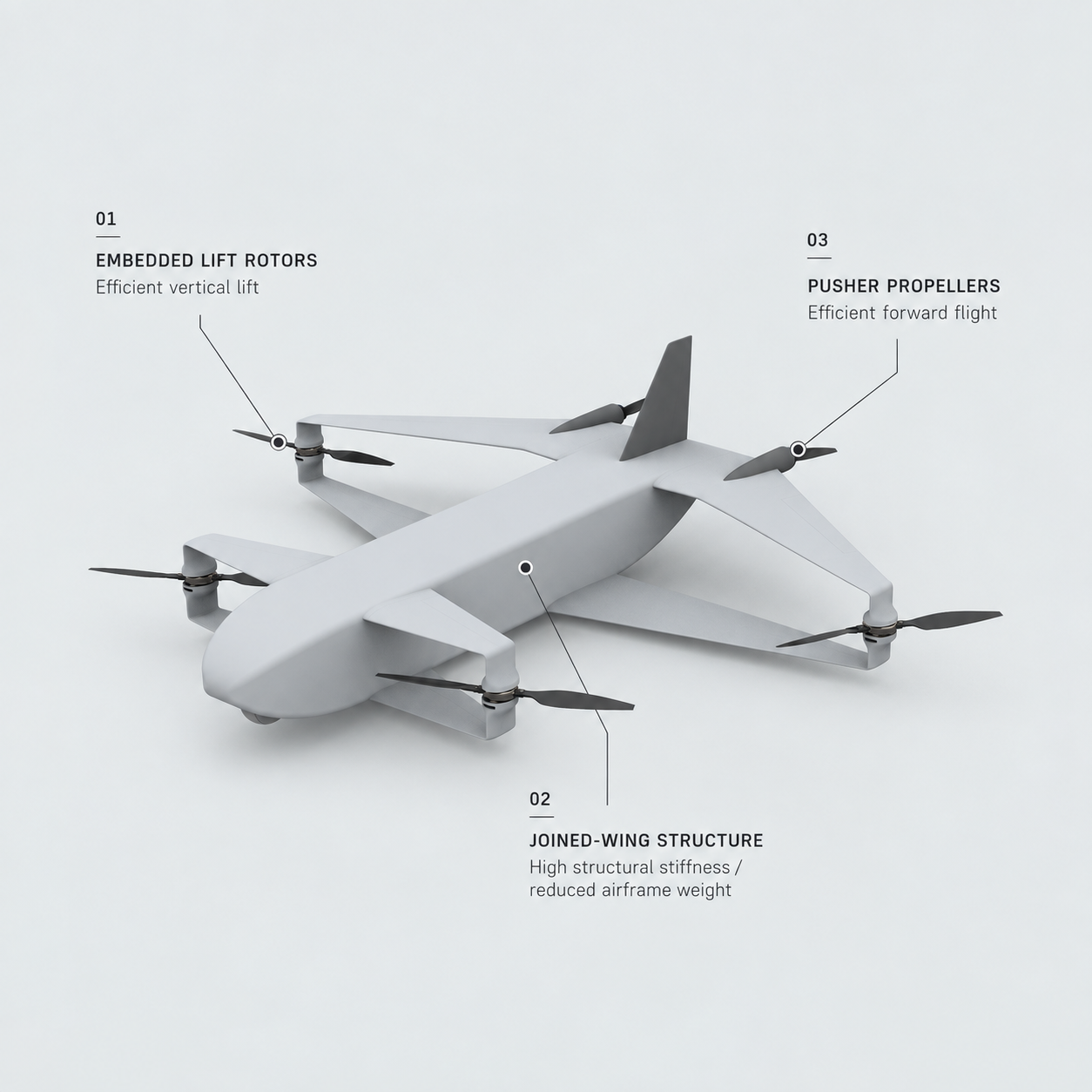
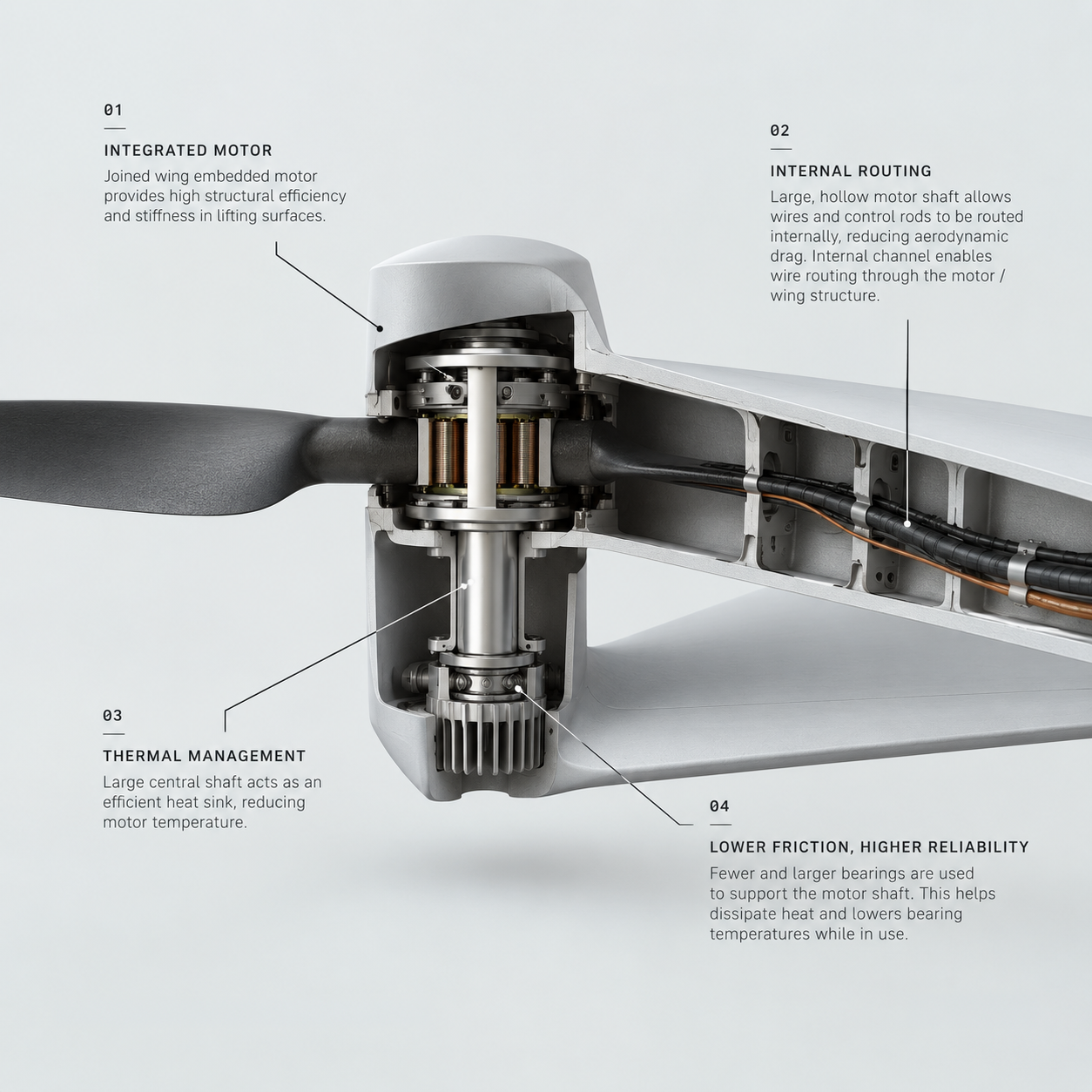
The Armada is a Lift + Cruise configuration that utilizes a highly structurally efficient joined wing embedded rotor architecture. Large lift rotors allow for efficient hover while dedicated drive rotors allow for increased speed and efficient cruise.
How is this better than other Lift + Cruise configurations (Elroy Air).
02 / ARTICLE• Large embedded lift rotors provide efficient vertical lift.
• The joined-wing structure provides aerodynamic lift during forward flight
• Canard-mounted drive rotors support hover before transitioning to forward propulsion
• Once wing-borne cruise is established, the main lift rotors power down
Designed to do Both
03 / ARTICLEA Better Way to Transition
• Javalina transitions between hover and cruise by rotating a small canard rather than the entire wing or primary rotor system
• Large fixed lift rotors provide the majority of vertical lift during hover
• Canard-mounted drive rotors contribute to hover and transition into forward propulsion
• As the aircraft becomes wing-borne, the main lift rotors power down
• Keeping the primary wing and lift-rotor system fixed reduces the mechanical complexity of transition
Three Ways to Fly
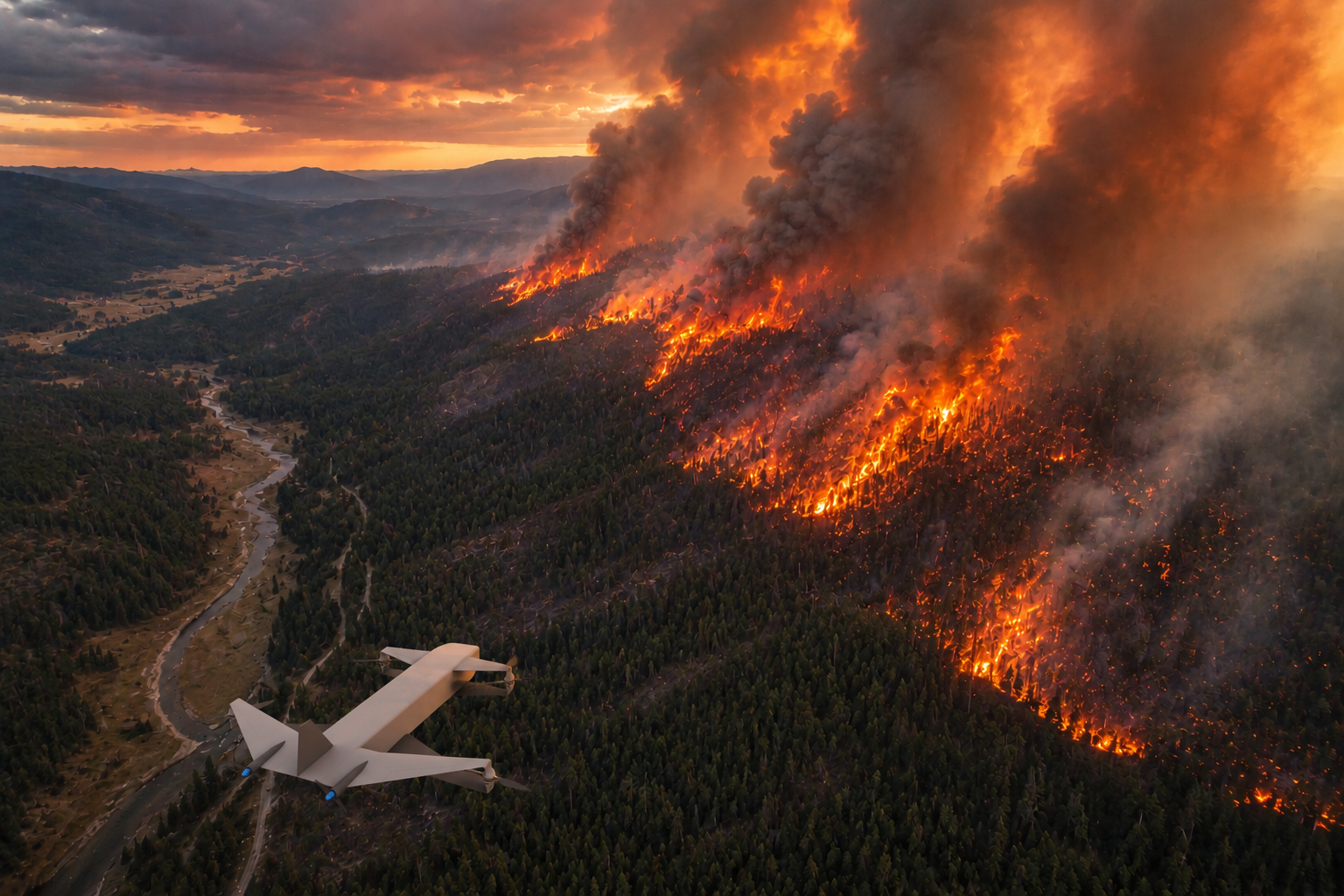
01 / VTOL
Vertical launch and recovery when no runway is available.
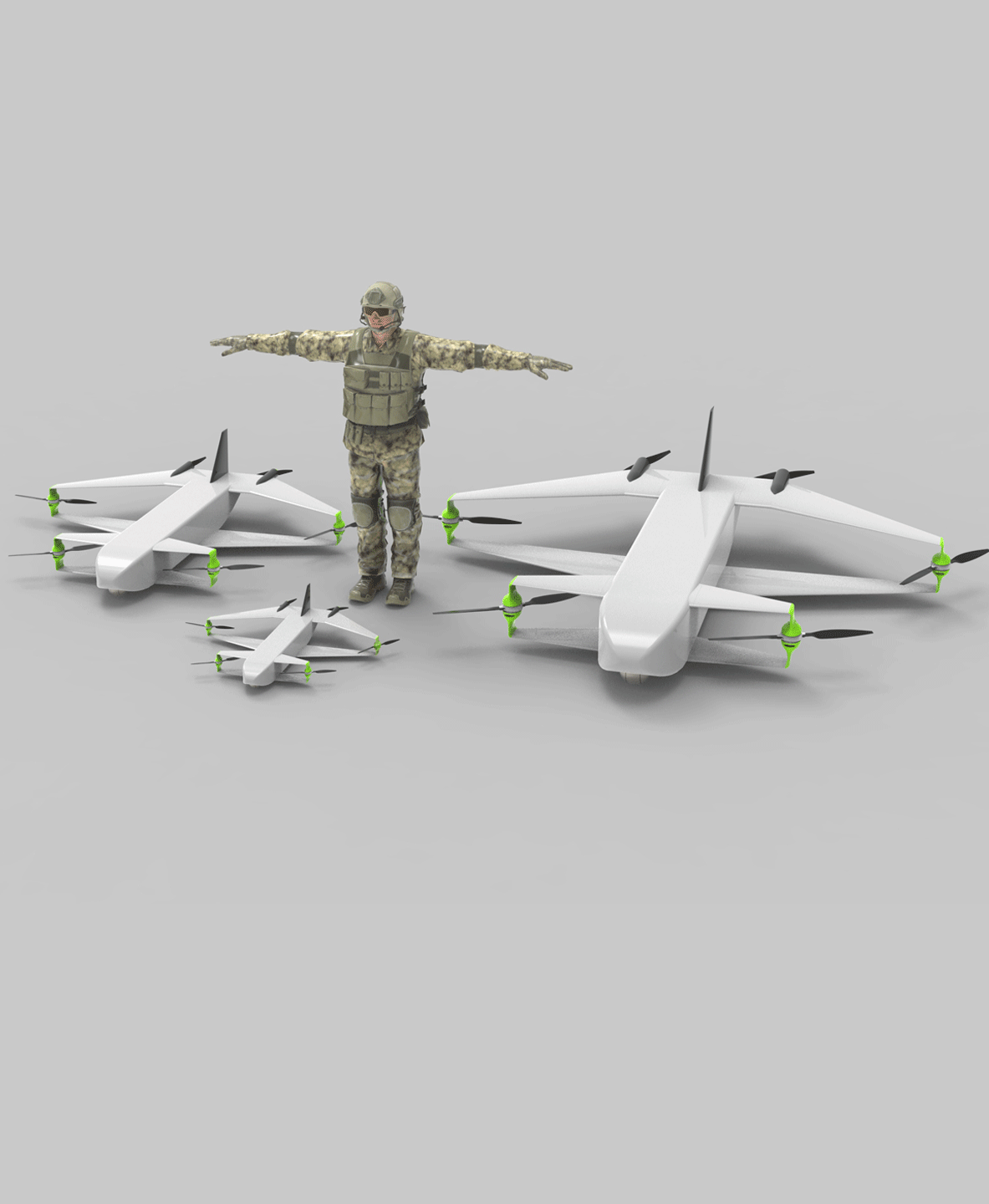
02 / STOL
Shortened rolling takeoff and landing when terrain and payload allow.
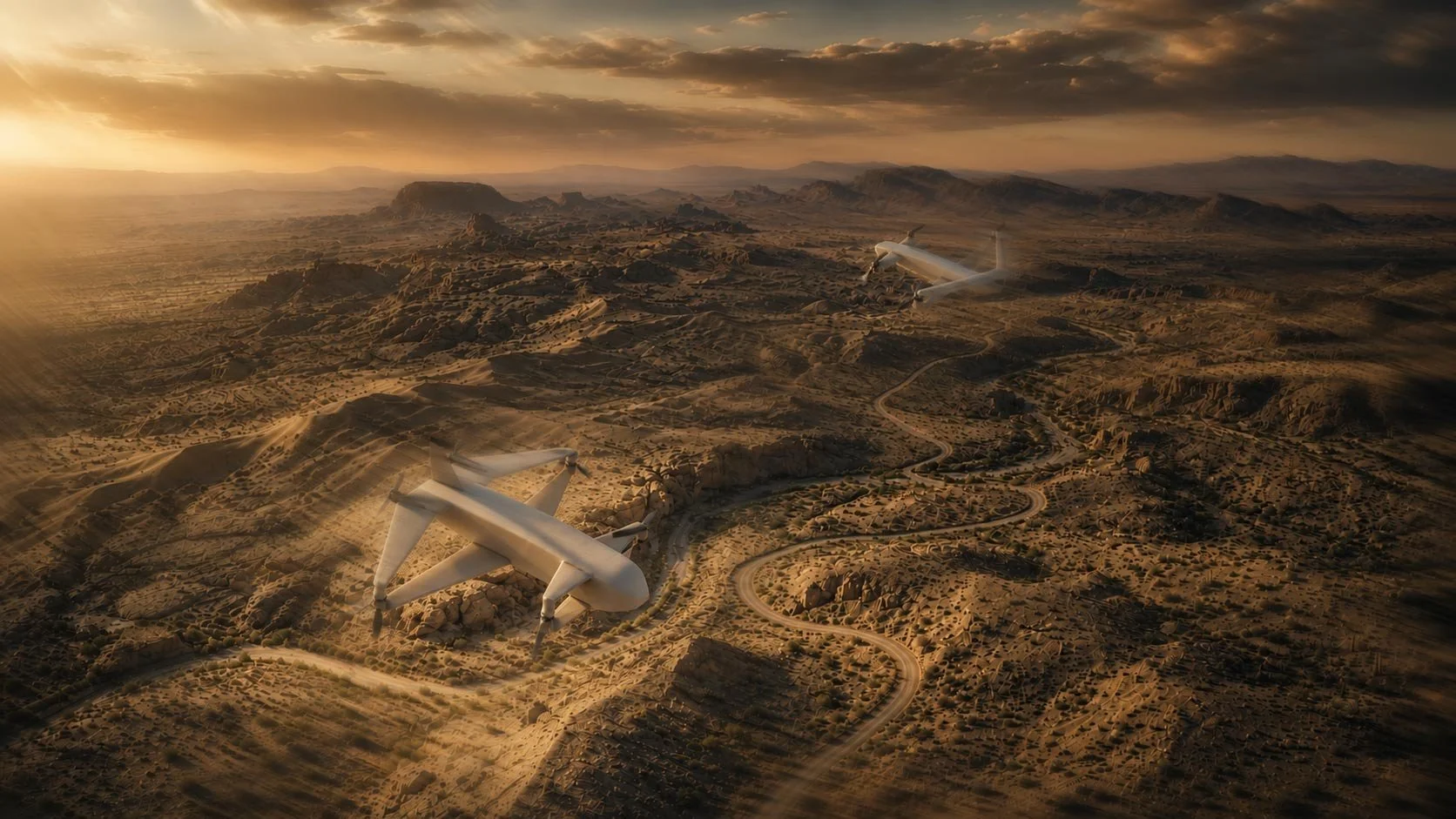
03 / CTOL
Conventional horizontal operation when infrastructure is available.
04 / ARTICLEBuilt for More Than
One Mission
DEFENSE - Persistent surveillance and multi-role deployment with limited launch infrastructure.
SEARCH + RESCUE - Efficient transit combined with vertical operation once on station.
MARITIME - Ship-to-shore and ship-to-ship operation without runway infrastructure.
INFRASTRUCTURE - Extended-range corridor inspection with vertical launch from remote sites.
COMMUNICATIONS - Relay and mesh-network operations in remote or contested environments.
SURVEYING - Large-area mapping with flexible vertical launch and recovery.
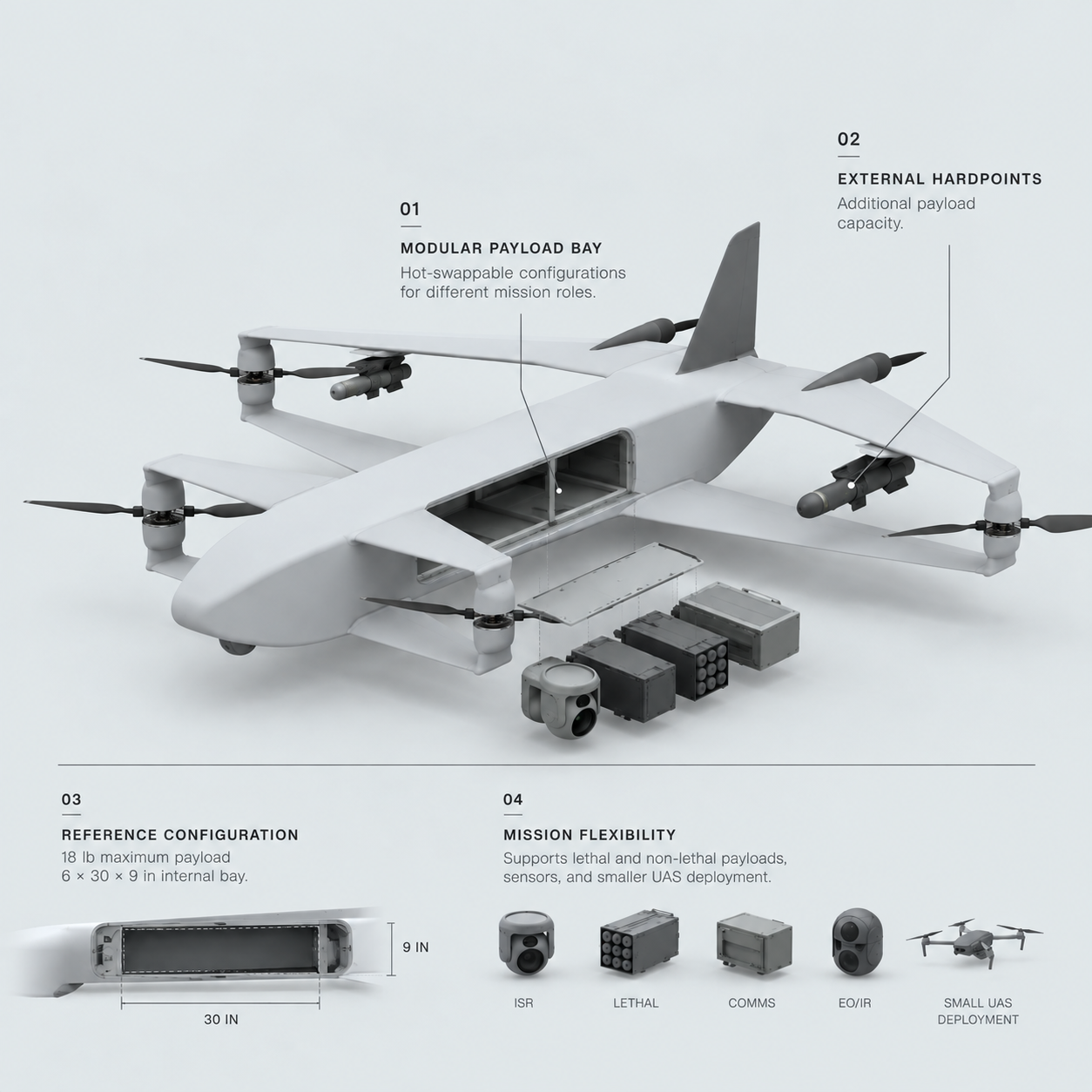
05 / ARTICLEVertical When You Need It.
Efficient When You Don’t.
01 / LAUNCH WITHOUT A RUNWAY
VTOL capability allows Javalina to launch and recover vertically from constrained or remote environments
02 / CRUISE ON THE WING
Once in forward flight, the wing provides lift and the primary lift rotors power down for efficient fixed-wing cruise
03 / CHOOSE THE RIGHT MODE
VTOL, STOL and CTOL operation gives operators the flexibility to match launch and recovery to the mission
Executive Summary
Javalina is Caelivore's multi-mode VTOL platform designed to address one of aviation's persistent engineering challenges: the opposing requirements of efficient hover and efficient forward flight.
Hover favors large, lightly loaded rotors, while efficient cruise favors a wing. Conventional VTOL approaches often resolve this conflict by tilting large rotors or wings, or by carrying propulsion systems into flight regimes where they are no longer efficient. Javalina takes a different approach.
Its joined-wing architecture incorporates fixed embedded lift rotors for vertical flight and a small tilting canard carrying dedicated drive rotors. During hover, the primary lift rotors provide the majority of vertical lift. As Javalina transitions to forward flight, the canard rotates forward and the aircraft becomes wing-borne, allowing the primary lift rotors to power down.
The result is an aircraft designed to combine efficient hover, efficient fixed-wing cruise and flexible VTOL, STOL and CTOL operation within a single platform.
02 / ARTICLEThe Hover / Cruise Tradeoff
Vertical flight and efficient cruise place fundamentally different demands on an aircraft.
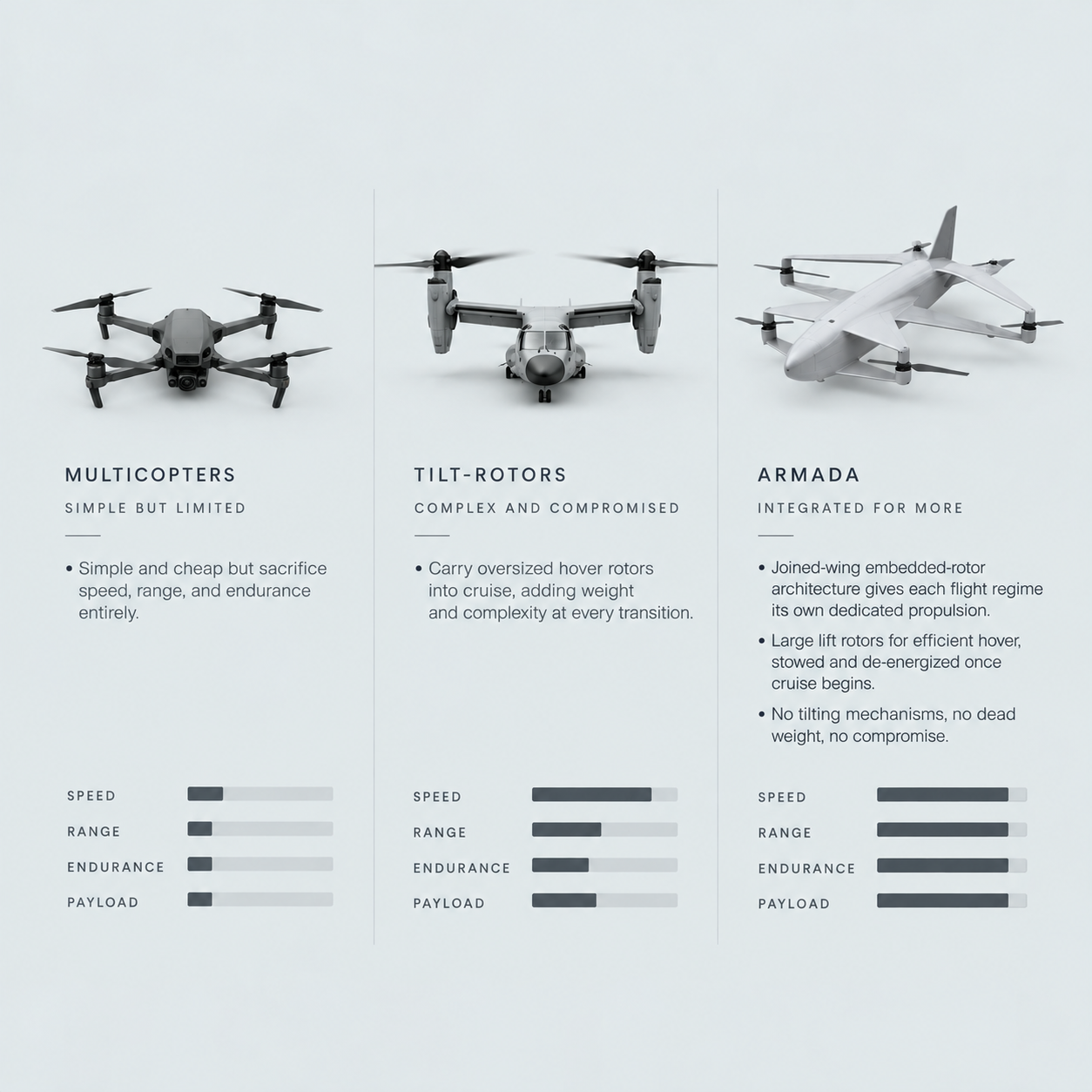
Multirotors excel at hover but sacrifice the aerodynamic efficiency of wing-borne cruise.
Tilt-rotor and tilt-wing aircraft transition between flight regimes by moving large propulsion systems or lifting surfaces, adding mechanical complexity.
Compound approaches combine separate hover and cruise systems, but carry the weight and drag of both throughout the mission.
Javalina is designed around a different principle: use dedicated components for each phase of flight without reconfiguring the entire aircraft.
Large fixed lift rotors are optimized for vertical flight. The wing carries the aircraft in cruise. A small tilting canard transitions its drive rotors from hover support to forward propulsion.
Efficient hover. Efficient cruise. One integrated aircraft.
AN EVOLUTION IN VTOL AVIATION80 YEARS IN THE MAKING.